
Picard as Father
‘His royal image stampt on thee’


Jean-Luc Picard is not a father. We could argue that this is the point (or one of the points) of him as a character in the Next Generation TV show: like Moses never setting foot upon the Promised Land, Picard yearns towards family, facilitates various other families, but never has children of his own. One of the through-lines of TNG goes from his expressed discomfort at having to command a ship on which there are many children, and his stiff awkwardness around children in the early episodes, via various adventures in which he is forced to engage with kids, growing closer to them (including one episode in which he literally becomes a kid), as well as adopting a paternal position with respect to Wesley Crusher, whose own father is dead (‘Shut up Wesley!’ notwithstanding)—emerging from the main storyline of TNG, in some ways, a pater. But never a biological father.
Given the endless churn of Trek trying-out various storylines, this bald assertion doesn’t hold for the larger NextGeniverse. In the lamentable Star Trek: Generations (1994) Jean-Luc spends some time (‘time’ isn’t the right word, but you know what I mean) inside the Nexus, with a wife and many children: married to a woman called Elise, with daughters Mimi, Olivia and Madison, and sons Matthew and Thomas. This circumstance does not last: Picard’s hyperbolic sense of duty wrenches him out of Nexusian paradise and back to his childlessness in the actual universe.
Then the end of TNG and its aftermath brought two ‘sons’, in a manner of speaking, to Picard.
One was the unlikely storyline of the Star Trek: Nemesis (2002) movie, in which we discover that bald Anglo actor Patrick Stewart (born 1940) and bald Anglo actor Tom Hardy (born 1977) are the same character, the latter having been cloned from Jean-Luc’s genetic materials, somehow, by the Romulans (with, it seems, the intent of eventually replacing Picard—although how Starfleet would swallow that their premier Captain was somehow suddenly 37 years younger isn’t explained) as ‘Shinzon’. The movie’s backstory is that this individual was first exiled to Remus, where he commanded soldiers during the Dominion War, his lowly humanness notwithstanding. Even more improbable is that he is later able to seize control of the Romulan Senate in a coup d’état, There are various strained shenanigans in the Nemesis storyline, with Picard eventually impaling his clone and killing him. This constitutes a genetic and narrative dead end, and can be disregarded.
Then there is the egregiously nonsensical and shoddy gubbins of Star Trek: Picard Series 3. In the course of this show we discover, with clumsy narrative concealment and a hurried reveal, that Picard does have a son, actually: fathered upon Beverley Crusher, but hidden from him.
Picard series 3 was designed as fanservice, a ‘greatest hits of TNG’: all your favourite characters brought back, in some cases literally from-the-dead, with a few sprinklings of stuff from other franchises—shapeshifters from DS9, the odd Voyager character, like Tuvok, popping up. But even these revert to TNG, because it turns out Tuvok is a shapeshifter and that the shapeshifters are actually (I’m not sure we’re told why) fronting for the Borg. The plot is incoherent, mayfly memoried, daft. The changelings go to extraordinary lengths in the first half of the show to capture Jack Crusher, Picard’s son, and the TNG crew go to extraordinary lengths to prevent Jack falling into the aliens’ shifty hands. Why do the shapeshifters want him? This is the mystery, and it strings the viewer along until in a rush we discover: they want him so as to be able to turn him over to the Borg, because Picard has inadvertently passed on Borgified DNA to his son, and the Borg Queen needs the lad for something nefarious. No sooner has this been revealed, and the changeling pursuit-ship Shrike is destroyed such that Jack is now safe, than Jack steals a shuttle and delivers himself to the Borg Queen anyway, just for the hell of it. Why? Who can plumb the mysteries of the human heart, or the inactivity of Star Fleet’s tractor beam technology. It makes a nonsense of the plotting of the whole first half of the series.
The fact of Picard having a son in this show requires the plot to violate the characterisation of these familiar individuals. These are people we can recognise: we ‘know who they are’. And as they appear in Picard series 3 none of them make sense, acting variously in ways that belong to different characters. Beverley Crusher, we discover, has given birth to Picard’s son, without telling Picard that she was even pregnant and then zapped away to some far-corner of the galaxy to hide. Why? There’s some half-hearted explanation that she wanted to ‘keep him safe’, but the Crusher of TNG would never do something as immoral as depriving her lover of the chance to be involved with upbringing of his son, or hiding from him the knowledge that he even was a father. She acts this way to enable the tacky soap-opera-esque ‘but who is this strange young fellow who also speaks with a posh-o English accent even though he’s been raised by a woman who speaks with an American accent—why Jean-Luc, it’s the son you never knew you had!’ reveal.
History, as Marx somewhere says Hegel somewhere says, recurs twice, first as tragedy, then as farce. The Picard 3 reveal is a ridiculous echo of the premise of Star Trek 2: the Wrath of Khan (1982) that Kirk, another childless starship captain, actually did have a son, the existence of which the show had previously not disclosed. A decades-previous dalliance with scientist Carol Marcus (Bibi Besch) had resulted in the birth of a boy, whom Marcus had raised alone, without involving Kirk. This is a little less egregious than the situation with Beverley Crusher—we don’t know Marcus the way six series of TNG have enabled us to know Crusher, so her selfishness, or perhaps wariness. is more believable. But here he is, David Marcus (played by Merritt Butrick), a scientist like his mother, but impetuous and thrusting like his father. Apparently Nicholas Meyer, the director, cast Butrick for the role because his hair was blond like Besch’s and curly like Shatner’s, ‘making him a plausible child of the two’. That’s method casting, and no mistake.
Wrath of Khan is space-melodrama and as such splendidly done. Though David Marcus’s death at the hands of a merciless Klingon is as arbitrary as his appearance in the movie in the first place, it does carry some emotional heft, and is paid through, to a point, in the later TOS movies. [On Bluesky, ‘Neomakjnovist’ points out that this is wrong: Marcus is killed in Star Trek 3: the Search for Spock, not in Wrath of Khan: a sloppy error on my part]. The situation in Picard 3 by comparison is absurd, uninvolving, nonsensical.
I describe this narrative reveal as a soap-opera conceit, and soap-opera does sometimes deploy it. For a character to father a child leaves the script-writers with a baby, dramatically unpromising (at least in the short term) and restricting. For a character’s long-lost or unknown now-grown-up child to appear adds a fully-grown adult, a whole character, to the ensemble.
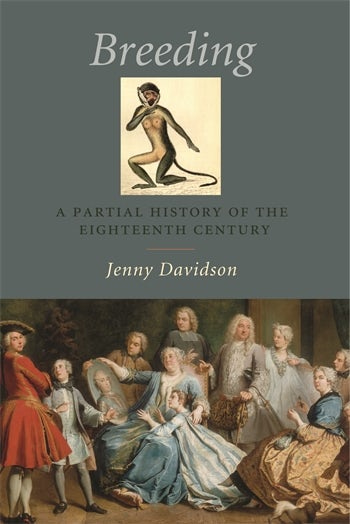
Another way of thinking about this is to characterise it not as soap-opera, but as one of the conventions of the much older mode, Romance (this is also to say that soap-opera is a form of Romance, as of course it is). Jenny Davidson reads The Winter’s Tale in this context ‘Why Children Look Like Their Fathers’:
Romance often features a young person whose mysteriously good breeding belies a lowly upbringing, and the working out of a romance plot mostly reveals breeding to be the result of blood rather than education: it might even be said that part of the job of romance is to argue that education doesn’t much matter except insofar as a rustic upbringing happily insulates a young prince or princess from corruptions by courtly manners. Even among romances, though, with their structural interest in reuniting families and their celebration of values associated with the natural and the hereditary, The Winter’s Tale (first performed in 1611 and published in 1623 Folio) is striking for its obsessiveness about inheritance and generation.1
This, I think, is the key to Picard 3’s cack-handed plotline. It is not that the show is interested in Picard himself as a father: it is that it is interested in the inheritance of Trek itself: in—as the second series in the franchise made explicit in its very title—the show’s generation. It is interested in paternity and original sin.
Davidson reads The Winter’s Tale in terms of the larger context of debates about inheritance (the play ‘provides a powerful framework for articulating arguments about personal identity in relation to the social world, particularly as to whether social differences are natural or acquired) and, specifically, paternity: ‘in Shakespeare’s play both male and female children are described in terms of their resemblance to the father’. As Davidson shows, Early Modern discourses of inheritability stressed the dominance of the father’s influence.
In the Generation of Animals Aristotle says that the mother contributes only the material out of which the child is formed, while the father determines the shape or form it will take: ‘the male provides the “form” and the “principle of the movement” the female provides the body, in other words, the material.’ Aristotle’s discussion generation continued to set the terms of European investigations into generation well into the seventeenth century. [Davidson, 21]
The pregnant mother was through to have a power to influence the development of the fetus, though the primary generational force was thought to be the father’s. Davidson cites various eighteenth-century beliefs concerning the disarranging potential of the maternal imagination (‘a desire for strawberries might produce a strawberry birthmark, the sight of a mutilated beggar a child with missing limbs’). The reassurance that a son who strongly resembled his father must be proof of the child’s legitimacy was challenged by this belief: ‘for some seventeenth- and eighteenth-century theorists of generation, a child comes to resemble his or her father primarily because the mother is thinking of the father at the moment of conception, and the significance of resemblance as a proof of legitimacy is thereby eroded: resemblance might be brought about because the mother, lying in her lover’s arms, feared discovery by her real husband.’
This in turn relates to the question, hotly debated during this period, of whether original sin is transmitted directly (we would say genetically) from parents to children, or not. The counter-argument is that a parent baptized into Christ was thereby touched by grace and so saved from passing sin to their offspring. Those who disagreed with this idea had Augustine as authority. He used the example of olive trees, and the fact that wild olive trees produced wild olive trees, but cultivated olive trees also produce wild olive trees, as, in Elizabeth Clark’s words, ‘his preferred metaphor to describe the transmission of sin, one that bolsters the principle that regenerated (ie baptized Christian) parents do not transmit to their children the state of their “rebirth” but their old “carnal” natures.’ Humans are born bad, tainted by original sin, and only grace can save them. Or humans are born good, and human society is perfectible: Rousseau’s insistence that Tout est bien sortant des mains de l'Auteur des choses, Tout dégénère entre les mains de l'homme. God makes all things good; man meddles with them and they become evil.2
Davidson explores the way these thelogical debates informed and continued in subsequent secular, scientific arguments about generation, descent and breeding: ‘the question of original sin—whether man is sinful by imitation or by descent—would be transformed by Locke and others into a scientific conversation about innate qualities whose resolutely secular tone only partly obscures its religious provenance’ [Davidson 29]. This, as Davidson argues, inhabits discussion that pit ‘nature versus nurture’ to this day.
The idea of the father’s dominance of inheritance, distorted by the wayward imaginative powers of the mother, is not true, of course. We now know that genetic material from sperm and egg is equally matched and combined in ways that don’t specifically favour one parent over the other. Star Trek, as a modern-day text, presumably understands the principles of Mendelian Inheritance in a way no Early Modern thinker did; but as text its lineaments of storytelling and characterization are pre-modern, and its unspoken assumptions about inheritance are pre-Mendel. What I mean by this is that, its many futuristic technological content and science-fictional set-dressing, Trek is basically Romance, in that it carries through many of the assumptions, narrative shapes, character types and figures from Romance.
So it is that Picard’s paternity is directly impressed upon his offspring (Davidson quotes the line in Winter’ Tale about how much Leontes’ baby child resembles him: ‘although the print be little, the whole matter/And copy of the father’; and the line from David Garrick’s revised version of the play: ‘her royal image stamped on thee’). Thus ‘Jack Crusher’, though raised by an American-accented parent, speaks with an English accent (the actor Ed Speleers is English of course).
Tom Hardy’s ‘Shinzon’ seems to be a case of rehearsing ‘nature versus nurture’, although in a pretty conceptually meagre fashion: Jean-Luc grew up in the Federation and became a good man; his clone, by nature exactly the same person as Picard, grew up amongst Romulans and became evil. But the case of Picard 3 reverts us to original sin, because, we discover, Picard himself has transmitted some remnant of his time as Locutus of Borg to his son. How this has happened is not explained in the show, because it doesn’t make sense by in-show logic—we have seen many times that Star Fleet medical technology can resolve and examine individual strands of DNA, can identify borg nanobots and so on. How was it Borg tech could hide inside Picard undetected, and in such a way that it could pass down through Picard’s own genetic material to his son? Worse, we discover the presence of this material was misdiagnosed as a disease called ‘Irumodic Syndrome’, which points to actual medical incompetence. But this is by-the-bye, since the real throughline here is something immaterial, sin as such, transmitted from father to son. The potency of this original sin is such that, in the series’ denouement, it passes through to, and is activated within, every person on earth under the age of 25. With all the world’s young people now Borg, the oldsters must save the day, which they do, Picard as pater taking on and defeating the Borg-mother.
On the one hand, this is, as Gerry Canavan says on this very blog, ‘Boomerslop’: the old are validated, the dangerous young curbed, and taught a lesson. As Father-of-this-blog himself Adam Kotsko says in his Late Star Trek book: ‘I don’t know how you could interpret that plotline as anything but the young people have been infected by the Woke Mind Virus and only we truly understand the world anymore.’ But we could see the current Boomer mindset itself as an iteration of an older concern, anxiety about the process of generation and transmission, of paternal inheritance and legitimacy damaged by female imaginative perversity, as a matter of sin. But then I am of that older generation myself. As my teenage son likes to say to me: ‘OK Boomer’.
Davidson notes that ‘Romance as a genre remains centrally committed to a notion of distinction via birth, a distinction that cannot be damped or dimmed by even the most humble upbringing’ [Davidson 53]. Shinzon achieves greatness despite his lowly and troubled upbringing because he bears the stamp of Picard, as father. David Marcus is not just some schlub: he is a brilliant, galaxy-leading scientist, capable of marvellous breakthroughs, if somewhat impetuous, and he is these things because his father is a brilliant, galaxy-leading starship captain, capable of marvellous things. Science-fiction, which is frequently Romance in high-tech fancy dress, is often doing this—the royal family saga of the Star Wars franchise, for instance; in which this one illustruous family’s royal inheritance is literalised as ‘the Force’. Roddenberry’s original vision for Trek was of a kind of futuristic perfectionism in which human nature is improved and improving, the show repeatedly falls back into the reactionary assumptions of Romance.
Jenny Davidson, Breeding. A Partial History of the Eighteenth-Century (Columbia Univ Press 2009), 15-16
Countering this is William Golding, who was a Lockean human-perfectability person in his youth but who had his mind changed by his naval service in World War 2. ‘Anyone who lived through that period,’ he later said, ‘without understanding that man makes evil, as a bee honey, must be not right in the head.’ Lord of the Flies is, fundamentally, an Original Sin novel.
In a series that could not stop shooting itself in the foot, the character assassination of Beverly Crusher may be PICARD's most inscrutable sin...
Giving Picard an actual son was extra frustrating because it had become clear long ago that Picard's efficacy as a leader and teacher was because his relationship with most of the men in his life was fundamentally paternal- Riker, Worf, and Data are all his sons, and Picard season 1 came perilously close to giving him an actual adopted child in the form of Elnor, which would have been all the more resonant because it represented a true generational change in the form of the collapse of the old political patterns of TNG, and a willful choice on Picard's part to embrace those nurturing elements of himself and formally retire his discomfort around kids. But somewhere in there Michael Chabon wandered off and they beat a hasty retreat all through season 2 at wiping out anything interesting that had been pregnant in PIC's premise.
There's some particular fanservice-scented fault that I feel needs its own name, where a story being brought to its ostensible fruition does nothing of the sort. Someone in the writing room thought they were cashing in a big chit with 'Picard finally has a kid with Beverly, his lifelong crush', but not a bit of it actually is informed by character. We have the option of Beverly, the genius space doctor, having a surprise baby at 60, or choosing to have a medical magic baby at 60, in both cases abandoning all her friends to 'keep him safe', which seems to have somehow ended up with Jack being wanted as a criminal and terrorist on multiple planets? What a good job keeping him safe from space antics. Was Jack actually a nice person, like either of his parents? Did we ever really find out?